
Gut-friendly desserts - will desserts supporting gut health become the next major category after high-protein?
Over the past few years, one of the strongest trends in functional food has been high protein content. High-protein products have appeared almost everywhere: in bars, yogurts, puddings, drinks, cereals, ice cream and desserts. The message was simple, clear and highly attractive to consumers: more protein means greater satiety, an active lifestyle and a better nutritional profile.
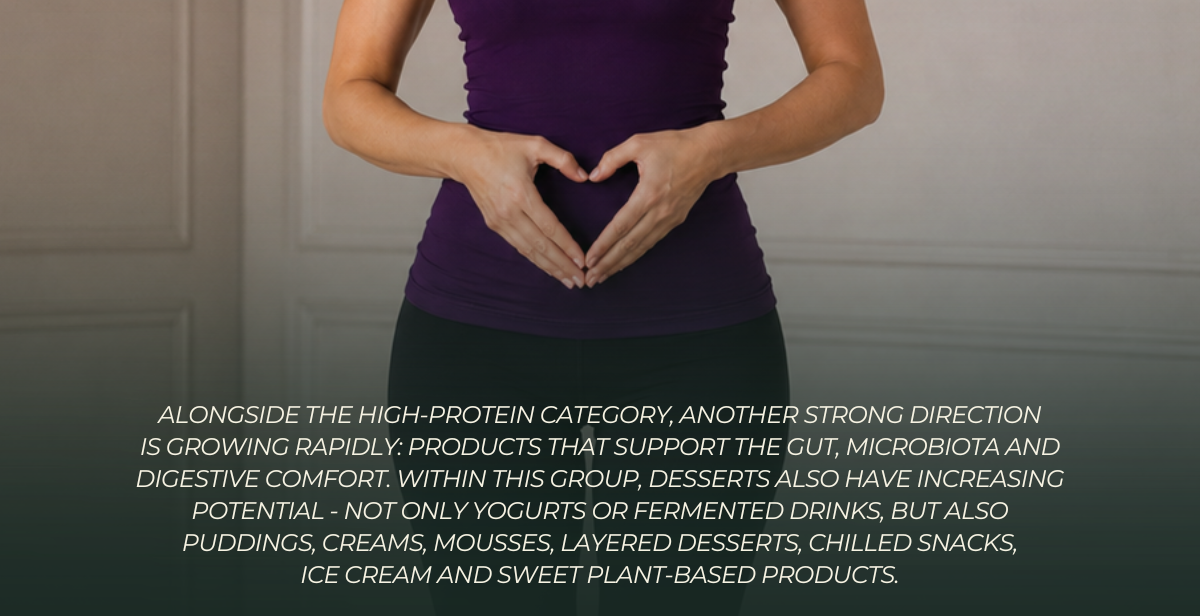
However, the functional food market is constantly evolving. Alongside the high-protein category, another strong direction is growing rapidly: products that support the gut, microbiota and digestive comfort. Within this group, desserts also have increasing potential – not only yogurts or fermented drinks, but also puddings, creams, mousses, layered desserts, chilled snacks, ice cream and sweet plant-based products.
This is where gut-friendly desserts can become one of the most interesting categories of the coming years. They do not have to completely replace high-protein products, but they will increasingly compete with them for consumers’ attention. Why? Because the gut is now seen not only as part of digestion, but as an important element of overall wellbeing.
The gut as the “second brain” – why does this message work?
The phrase “the gut is the second brain” appears more and more often in health and nutrition communication. It comes from the growing consumer awareness of the so-called gut-brain axis, meaning the two-way communication between the digestive system and the nervous system.
For consumers, this topic is very intuitive. Many people notice that the way they eat affects not only digestion, but also energy levels, mood, concentration, immunity and overall wellbeing. This is why products supporting gut health have the potential to go beyond the narrow “digestion” category. They can be communicated more broadly – as part of daily care for the body, comfort and balance.
This is an important difference compared with high-protein. Protein is a strong but rather specific benefit. The gut, on the other hand, connects with many areas of consumers’ lives: lightness, immunity, energy, wellbeing, diet, skin and even emotions. As a result, gut health communication can be more holistic and more lifestyle-oriented.
Why can desserts be the perfect format for gut health?
Desserts are an emotional category. Consumers reach for them for pleasure, taste, texture and a moment of indulgence. At the same time, they increasingly expect a sweet product to offer more than just “empty pleasure”: a better composition, less sugar, plant-based origin, fiber, fermented ingredients or a functional benefit. This is where gut-friendly desserts create an opportunity.
They can combine two worlds:
🌱 the pleasure of dessert
🌱 the functionality of a product supporting everyday wellbeing.
A gut-friendly dessert does not have to look like a supplement. Quite the opposite – the greatest potential lies in products that look and taste like attractive desserts while also delivering added value: fiber, prebiotics, bacterial cultures, fermented ingredients or plant-based components supporting the microbiota.
What can build the gut-friendly desserts category?
Gut-friendly desserts can be developed in several ways. The key is to select ingredients that support product positioning without compromising sensory quality.
1. Fiber as the main functional ingredient
Fiber may become for the gut health category what protein has become for the high-protein category. It is a simple, understandable message that consumers increasingly appreciate. In desserts, different sources of fiber can be used, including:
🌱 oat fiber
🌱 chicory fiber
🌱 inulin
🌱 apple fiber
🌱 fiber from legumes
🌱 naturally fiber-rich fruit, cereal or nut bases.
Fiber can support communication around digestion, satiety and a better nutritional profile. In plant-based products, it has an additional advantage: it fits naturally into a “plant-powered” recipe character.
2. Prebiotics – support for the microbiota
Prebiotics are ingredients that act as food for beneficial gut bacteria. In consumer communication, they are becoming increasingly attractive because they connect directly with the topic of the microbiota. In desserts, prebiotics can be used in puddings, creams, mousses, dessert drinks, ice cream or chilled bars. They work well with oat bases, plant-based creams, fruit and better-for-you products.
3. Probiotics and bacterial cultures
Probiotic products are already well known from yogurts, kefirs and fermented drinks. The next step may be the development of desserts that combine fermented or probiotic components with an attractive sweet application. However, in such products it is important to maintain the right stability of bacterial cultures, proper storage conditions and communication compliant with regulations on health claims.
4. Fermented plant-based ingredients
Fermentation is one of the most attractive directions for the gut-friendly category. It is naturally associated with the gut, tradition, craftsmanship and functionality. In desserts, fermented components can be used in a gentle, accessible way – so that they do not dominate the taste, but build a more modern product profile.
5. Lower sugar content and a milder sweetness profile
The gut health category naturally connects with a more conscious approach to sugar. Consumers looking for gut-supporting products often pay attention not only to fiber or probiotics, but also to the overall balance of the recipe.
This is why gut-friendly desserts can develop towards:
🌱 lower sugar content
🌱 fruit-based sweetness
🌱 the use of dates, bananas or fruit purées
🌱 a milder sweetness profile
🌱 combining sweetness with sour, cereal, nutty or cocoa notes.
Such a product can still be a dessert, but perceived as a more everyday, lighter and more conscious choice.
Gut health vs high-protein – competition or complement?
High-protein remains a very strong trend. It is easy to communicate and continues to answer important consumer needs: satiety, activity, diet control and convenience. However, its popularity makes the category increasingly competitive and harder to stand out in.
Gut health may be the next stage in the development of functional food. It has a broader context and a more emotional character. Protein answers the question: “Will this product fill me up?”. Gut-friendly answers the question: “Does this product support my everyday wellbeing?”.
In practice, these two categories do not have to exclude each other. The most interesting products of the future may combine both benefits:
🌱 plant-based dessert with high protein and fiber content
🌱 protein pudding with prebiotics
🌱 plant-based dessert cream supporting the microbiota
🌱 high-protein frozen bar with added fiber
🌱 layered dessert with plant protein and a fermented base.
However, in marketing communication, gut health may gradually take over the role of a more advanced, modern benefit. For many consumers, “more protein” is already becoming standard. “Microbiota support” or “gut-friendly dessert” may sound fresher, more premium and more holistic.
How can producers use this trend?
For food producers, gut-friendly desserts are a category with strong innovation potential. They can be developed in retail products, private label, HoReCa, chilled desserts, frozen desserts and on-the-go products.
1. Create a product that is still a dessert
The most important rule: functionality cannot replace taste. A consumer reaching for dessert expects pleasure. That is why a gut-supporting product should be creamy, attractive and well-developed from a sensory perspective.
Good flavor directions:
🌱 cocoa and cherry
🌱 vanilla and forest fruits
🌱 mango and coconut
🌱 pistachio and oat
🌱 apple and cinnamon
🌱 coffee and chocolate
🌱 banana and peanut butter.
2. Choose one clear benefit
Communication should not be too complicated. Instead of talking about everything at once, it is worth choosing one main benefit:
🌱 source of fiber
🌱 high fiber content
🌱 with added prebiotics
🌱 with bacterial cultures
🌱 based on fermented plant-based ingredients
🌱 plant-based dessert supporting everyday diet.
The simpler the message, the easier it is for consumers to understand the product.
3. Build the category around everyday routines
Gut-friendly desserts have the potential to move beyond occasional indulgence. They can be eaten as:
🌱 a quick snack at work
🌱 a dessert after lunch
🌱 part of breakfast
🌱 a post-workout product
🌱 a light evening snack
🌱 an on-the-go snack.
This is important because functional products work best from a marketing perspective when they can be included in daily routines.
What should producers watch out for in communication?
The topic of gut health and microbiota is highly attractive, but it requires responsible communication. It is important to avoid overly medical promises and not suggest treatment of health problems.
It is better to focus on the language of:
🌱 supporting the everyday diet
🌱 source of fiber
🌱 prebiotic ingredients
🌱 fermented bases
🌱 comfort and lightness
🌱 conscious choice.
Depending on the market and product composition, it is also necessary to check which nutrition and health claims can legally be used on packaging and in marketing materials.
Conclusion
Gut-friendly desserts are a category that may increasingly compete with high-protein products for consumers’ attention. High protein content remains an important benefit, but gut health, microbiota and the gut-brain axis create a more holistic and emotional narrative.
For producers, this is a major opportunity. Desserts supporting gut health can combine pleasure, functionality and plant-based ingredients in one attractive format. They can be creamy, sweet, fruity, chocolatey, frozen, layered or fermented – while also responding to the growing need to care for everyday wellbeing.
In the coming years, the question will not only be: “How much protein does this dessert contain?”. Consumers will increasingly also ask: “What does this product do for my body, gut and overall wellbeing?”. This is why gut-friendly desserts may become one of the most important categories in modern plant-based desserts.
Click and join our newsletter
The best for you
Reach us out
Vegan Stock sp. z o.o.
address:
6, Józefa Marcika Str,
30-443 Kraków, Poland
Tax ID No. PL7352876025