From Idea to Shelf: The Full Process Behind Product Development
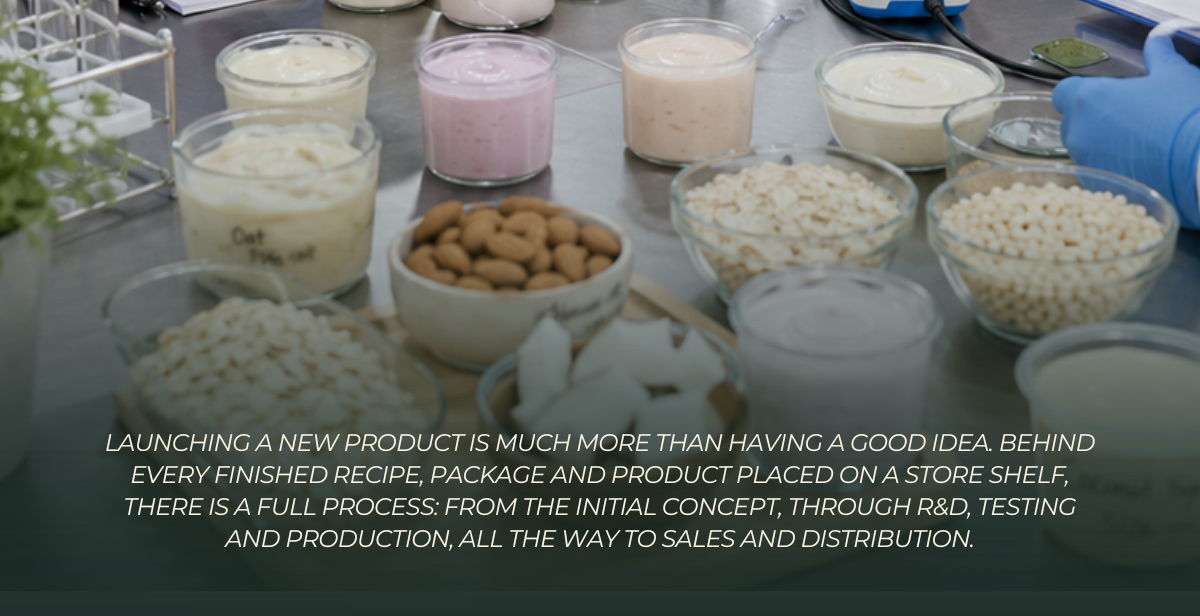
Launching a new product is much more than having a good idea. Behind every finished recipe, package and product placed on a store shelf, there is a full process: from the initial concept, through R&D, testing and production, all the way to sales and distribution.
In the food industry, especially in the plant-based, functional and high-protein segments, the journey from idea to shelf requires not only creativity, but also technological knowledge, ingredient expertise, production experience and a strong understanding of consumer expectations.
1. Product concept – where everything begins
Every product starts with an idea. It may come from market trends, consumer needs, a gap in the competitor landscape or a request from a manufacturer looking to create something new.
At this stage, it is crucial to define what the product should be and who it is created for. Should it be plant-based? High in protein? Gluten-free? Clean label? Ready to eat? Or maybe it should respond to a specific trend, such as healthy snacks, dairy alternatives, sports nutrition or functional foods?
A strong product concept should combine consumer appeal with realistic technological and production possibilities.
2. Ingredient selection and R&D
Once the concept is defined, the R&D stage begins. This is the moment when the idea starts to take a real form. The technology team selects the right ingredients and analyzes their functionality, taste, texture, nutritional value and behavior during production. In plant-based products, ingredients such as plant proteins, starches, fibers, fats, stabilizers, natural flavors and taste concentrates play a particularly important role.
At this stage, the first product samples are created. Very often, the recipe requires multiple adjustments: changing ingredient proportions, improving texture, reducing sugar levels, increasing protein content or refining the taste profile.
R&D is a process of trials, testing and optimization. The goal is to create a product that is tasty, stable, scalable for larger production and attractive to the market.
3. Product testing
Once the first refined recipe is ready, it is time for testing. This includes both sensory and technological evaluation. Taste, aroma, color, texture, appearance and overall consumer experience are assessed.
At the same time, product stability, shelf life, temperature resistance, quality over time and performance throughout the declared best-before period are also analyzed.
Testing helps answer key questions: does the product meet the initial assumptions? Is the taste repeatable? Does the recipe work under production conditions? Will the product remain attractive to consumers after several weeks or months?
4. Scaling and production
One of the biggest challenges is moving from a small laboratory sample to large-scale production. What works in a test kitchen or laboratory does not always behave in the same way on a production line. During the scaling stage, the recipe is adapted to specific equipment, process parameters and production facility requirements. Mixing, heat treatment, packaging, process efficiency and quality repeatability are all carefully verified.
Production requires precision, control and proper preparation. Ensuring food safety, compliance with quality standards and stability of every production batch is essential.
5. Packaging, labeling and communication
A product is not only a recipe. Packaging is equally important, as it protects the food, influences shelf life, supports transport and attracts consumer attention. At this stage, the label, ingredient list, nutritional values, marketing claims and brand communication are also prepared. All information must be compliant with regulations while remaining clear and understandable for the consumer.
Well-designed communication helps consumers quickly understand what the product is, what benefits it offers and why it is worth choosing.
6. Sales and shelf placement
The final stage is launching the product into sales. This may include distribution to retail chains, specialist stores, foodservice, e-commerce or B2B channels.
Reaching the shelf requires a strong commercial offer, sales materials, arguments for buyers and a promotion plan. Price, margin, logistics, product availability and marketing support are also important.
Only the combination of a refined recipe, efficient production, attractive packaging and effective sales allows the product to truly enter the market. From idea to finished product 🌱 The “from idea to shelf” process shows that the success of a new product does not depend only on a creative idea. It is the result of cooperation between many areas: R&D, technology, quality, production, marketing, sales and logistics.
A well-planned process helps reduce risk, shorten implementation time and create a product that responds both to consumer needs and market requirements. That is why every stage – from the first concept to the final place on the store shelf – matters.
Vegan Stock can support this process at every stage: from ingredient selection and concept development, through R&D and product testing, to scaling, production preparation and market implementation. With access to a wide portfolio of plant-based ingredients and industry knowledge, Vegan Stock helps brands and manufacturers turn product ideas into real market-ready solutions.
Click and join our newsletter
The best for you
Reach us out
Vegan Stock sp. z o.o.
address:
6, Józefa Marcika Str,
30-443 Kraków, Poland
Tax ID No. PL7352876025