
Plant-based products for HoReCa: What do Chefs need?
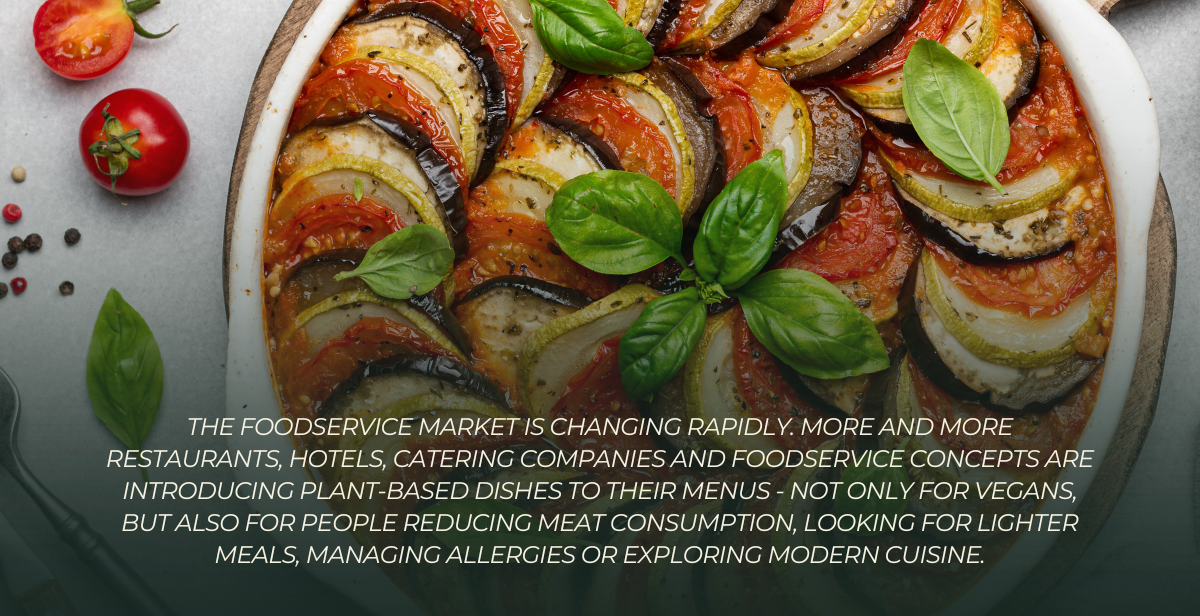
The foodservice market is changing rapidly. More and more restaurants, hotels, catering companies and foodservice concepts are introducing plant-based dishes to their menus – not only for vegans, but also for people reducing meat consumption, looking for lighter meals, managing allergies or exploring modern cuisine.
For chefs, however, plant-based products must meet very specific requirements. In gastronomy, it is not only the ingredient list or the idea behind the product that matters, but above all taste, repeatability, ease of use, processing stability and cost-effectiveness.
Taste as the starting point
In HoReCa, taste comes first. A plant-based product may have a great ingredient list, high protein content and an attractive story, but if it does not perform well on the plate, it will not stay on the menu for long.
Chefs look for ingredients that work well with different cuisines, sauces, spices and preparation techniques. The product should be neutral or well-balanced in flavor, giving chefs the flexibility to create many dishes – from simple lunch options and hotel cuisine to more creative restaurant concepts.
In the case of plant-based products, it is especially important to avoid undesirable flavor notes such as excessive earthiness, bitterness, flouriness or an intense legume aftertaste.
Repeatability and stable quality
Gastronomy needs products that behave the same way with every delivery and in every batch. A chef must be sure that an ingredient will perform predictably – regardless of the day, staff shift or order size.
Repeatability is particularly important in hotels, chain restaurants, event catering and central kitchens. If a product provides good texture once but behaves differently another time, it makes kitchen work more difficult and increases the risk of complaints.
That is why plant-based products for HoReCa should offer stable quality, be easy to standardize and be adapted to the conditions of a professional kitchen.
Convenience and speed of preparation
In gastronomy, time is extremely important. Chefs need solutions that make work easier, shorten preparation time and help maintain smooth service.
Plant-based products should be simple to use, easy to portion, store and prepare. For many kitchens, it is also important that one product can be used in multiple applications – for example as a base for sauces, soups, desserts, beverages, main dishes or high-protein products.
The easier it is to include a product in everyday kitchen work, the greater the chance that it will become a permanent part of the menu.
Stability during processing
Chefs need products that perform well during frying, cooking, baking, freezing, blending or reheating. In HoReCa, a product must withstand real kitchen conditions: fast pace, high temperatures, preparation in advance and service in large numbers of portions.
For plant-based ingredients, key factors include texture, water binding, emulsion stability, resistance to separation, creaminess and structural integrity after processing.
A product that looks and tastes good in a sample but loses quality after heating or a few hours in a bain-marie will not be a practical solution for gastronomy.
Versatility of application
Flexibility is very important for chefs. One ingredient that can be used in many recipes has greater value than a product with a very narrow application.
Plant proteins, drink powders, plant-based milks, nut pastes, fibers and starches can support the creation of many different products and dishes: from sauces, soups and creams to desserts, shakes, bakery products, high-protein dishes, dairy alternatives and ready-to-use menu components.
Versatility allows chefs to experiment, optimize costs and respond more quickly to guests’ needs.
Good ingredient profile and clear communication
Guests are increasingly paying attention to product ingredients, allergens, ingredient origin and nutritional values. That is why chefs and gastronomy managers need solutions that can be clearly communicated on the menu.
Important features include: plant-based, lactose-free, gluten-free, high-protein, clean label, source of fiber or suitable for specific consumer groups.
Clear communication supports not only dish sales, but also front-of-house staff, who need to explain to guests what is on the plate and why a particular menu item is worth choosing.
Cost-effectiveness and cost control
Even the best product must make economic sense. In HoReCa, portion cost, yield, ease of storage, waste reduction and the possibility of using one product in multiple dishes all matter.
Chefs and restaurant owners look for ingredients that help maintain quality while allowing them to control food cost. That is why stable, efficient and easy-to-use products are so important.
Plant-based solutions can be attractive for gastronomy when they combine good taste, functionality and kitchen economics.
What do chefs need first?
First and foremost, chefs need plant-based products that work in practice. It is not enough for an ingredient to look good in a presentation or fit into a trend. It must perform during everyday service, at scale and across different preparation techniques.
Taste, repeatability, stability, ease of use, versatility and cost-effectiveness are the most important factors. These are the qualities that determine whether a product enters the menu and stays there longer.
Plant-Based solutions for professional gastronomy
Well-selected plant-based products can truly support chefs in creating modern, tasty and functional dishes. They can help expand the menu, respond to the needs of new consumer groups and increase the attractiveness of a gastronomic offer.
Vegan Stock can support the HoReCa sector in selecting plant-based ingredients tailored to specific applications – from beverages, desserts and sauces to high-protein products and solutions for hotel, restaurant and catering kitchens. With a broad ingredient portfolio and market expertise, Vegan Stock helps create products and recipes that respond to the real needs of chefs.
Click and join our newsletter
The best for you
Reach us out
Vegan Stock sp. z o.o.
address:
6, Józefa Marcika Str,
30-443 Kraków, Poland
Tax ID No. PL7352876025