
Comfort Food, Plant-Based Edition: Classics Reimagined
Comfort food is much more than simply “something tasty to eat.” These are dishes and products associated with pleasure, safety, home, childhood, or specific moments in life. For one person, it may be a bowl of hot soup; for another, pancakes with a creamy filling, waffles eaten on holiday, pasta with a rich sauce, pizza, mashed potatoes, a mayonnaise-based dip, or crispy nuggets.
This is exactly why comfort food is such an interesting category for plant-based food manufacturers. Consumers are not primarily looking for an “alternative” product here. They are looking for an experience they already know.
And that changes the way plant-based comfort food should be developed.
1. What exactly is comfort food?
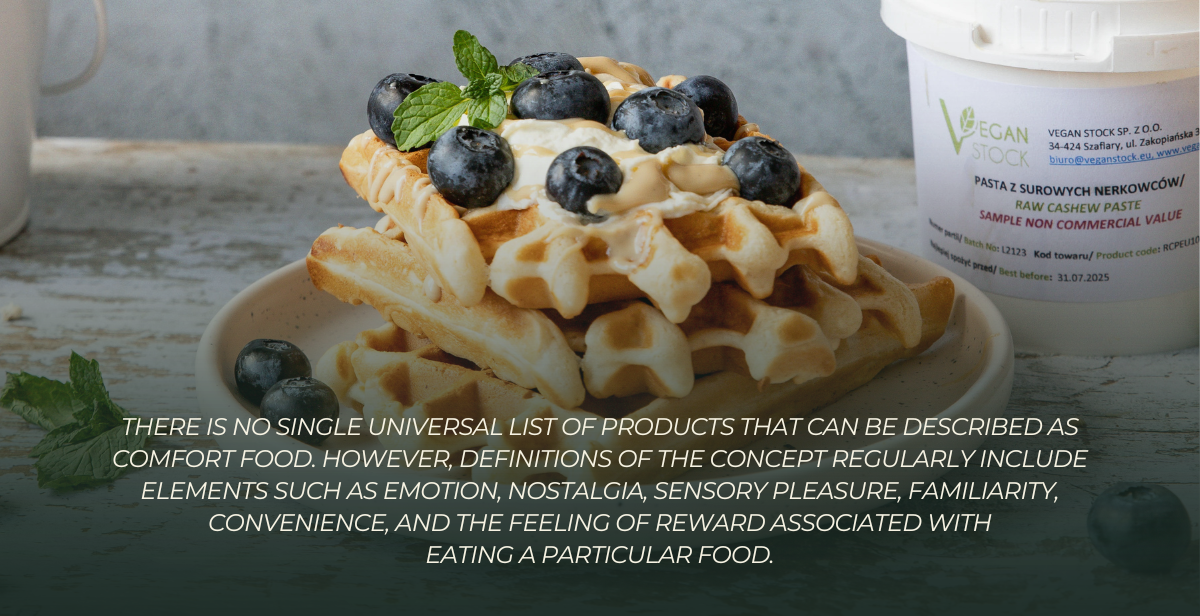
There is no single universal list of products that can be described as comfort food. However, definitions of the concept regularly include elements such as emotion, nostalgia, sensory pleasure, familiarity, convenience, and the feeling of reward associated with eating a particular food.
Context is also extremely important. Comfort food often brings back memories connected with family, home, childhood, holidays, or eating together. That is why the same dish can have a completely different meaning for different consumers. Comfort food does not have to be the most sophisticated dish or a premium product. Quite the opposite. Very often, its greatest strength is familiarity.
It is the kind of food where we already know what to expect. A creamy tomato soup, a pancake, a crispy waffle, pizza, pasta with a cheesy sauce, or a sandwich with mayonnaise does not require the consumer to learn a new way of eating. It simply needs to be as good as they remember it.
2. What role does comfort food play?
Comfort food can serve several functions at the same time. First of all, it delivers sensory pleasure. Taste, aroma, temperature, and texture combine to create an experience that consumers often actively seek out.
The second element is nostalgia. Some products are strongly associated with memories – a homemade lunch, holidays, a family breakfast, or meals prepared by parents or grandparents.
Another important function is convenience. Modern comfort food is very often closely linked to the convenience category. Consumers want to enjoy a familiar and satisfying meal without spending hours in the kitchen.
There is also a social dimension. Pizza, pancakes, waffles, burgers, soups, or desserts are often eaten together. Comfort food can therefore become part of specific rituals, occasions, and shared experiences.
3. Plant-based should not remove the “comfort”
This is one of the most important points when developing plant-based versions of classic products. When consumers choose a plant-based burger, mayonnaise, pancake, or creamy sauce, they usually do not want to be constantly reminded that they are eating a substitute. They expect a similar level of enjoyment.
A waffle should be crispy on the outside and soft on the inside. A pancake should be flexible and easy to roll. Mayonnaise should be creamy, smooth, and stable. A cream soup should have the right viscosity and depth of flavour. A sauce should coat pasta properly, while a plant-based cream alternative should remain stable during cooking.
This is precisely where food technology meets emotion. A product can have a very good ingredient list and an attractive nutritional profile, but if it does not deliver the expected texture, aroma, or richness, it may fail to fulfil its basic role as comfort food.
4. Which types of comfort food can be translated into plant-based?
From a manufacturer’s point of view, several particularly interesting areas can be identified.
4.1. Breakfast comfort food: waffles, crepes, and pancakes
This is a very natural area for plant-based product development. Traditional recipes often contain milk, butter, and eggs, which means that the key challenge is not replacing a single ingredient, but several ingredients that perform different technological functions.
Eggs contribute, among other things, to structure and binding. Milk affects flavour, colour, and batter structure. Fat helps create softness and a pleasant eating experience.
Plant-based versions can use oat, soy, or other plant-based bases, appropriately selected oils, and functional ingredients supporting water binding and product structure. The market already includes both ready-to-eat products and mixes designed for quick preparation of pancakes or waffles. A good example is Birch Benders, which offers plant-based Pancake & Waffle Mix products.
This also highlights an important direction of development: comfort food can combine indulgence with convenience. It does not have to be a ready-made product only. It can also take the form of a premix, concentrate, or instant solution that allows consumers to recreate a familiar meal quickly at home.
4.2. Mayonnaise, dips, and creamy sauces
Mayonnaise is a particularly interesting example of plant-based comfort food because, from the consumer’s perspective, its sensory function is what matters most. The product should be thick, creamy, slightly tangy, and rich, while also spreading easily on a sandwich, binding ingredients in a salad, or serving as the base for a dip.
Traditional mayonnaise uses egg as an important part of the emulsion. In a plant-based formulation, a stable oil-and-water system needs to be created without it.
Solutions may include appropriately selected plant proteins, starches, hydrocolloids, and other ingredients that help stabilise the emulsion.
The scale of the category’s potential is well illustrated by Hellmann’s, which offers a plant-based alternative to traditional mayonnaise. Heinz is developing a similar direction with its Seriously Good Vegan Mayo.
Plant-based mayonnaise alternatives are not limited to the largest global corporations, however. A good example from the Polish market is Go Vege – a private-label brand of the Biedronka retail chain, owned by Jeronimo Martins Polska. Its range includes, among other products, a vegan salad mayonnaise. This is a good example of how plant-based versions of classic sauces have entered mainstream retail and become part of everyday shopping rather than remaining confined to a specialist vegan category.
But the opportunities go far beyond classic mayonnaise. The same development direction can include aioli, burger sauces, tartar sauce, ranch, garlic sauces, salad dressings, and spicy mayonnaise-style products.
For manufacturers, this is a particularly attractive category because one well-developed emulsion system can become the starting point for an entire family of products.
4.3. Soups – one of the most natural forms of comfort food
A hot bowl of soup is probably one of the most universal examples of food associated with home. Tomato, pumpkin, mushroom, onion, pea, vegetable cream soups, or plant-based interpretations of traditional regional soups all fit naturally into the plant-based category.
In this case, switching to plant-based ingredients can feel especially natural. The main challenge is achieving enough richness and creaminess, particularly in products that traditionally contain cream, butter, meat, or meat-based stock. Oat-based components, plant fats, appropriately selected proteins, starches, fibre, and flavour systems that build umami can all help.
One manufacturer strongly associated with this category is Amy’s Kitchen, whose portfolio includes a broad range of ready-to-eat soups, including vegan and plant-based varieties. In this case, comfort food also meets convenience food – a soup can become a complete meal requiring nothing more than reheating.
The possibilities are much broader, however. Plant-based versions can range from creamy tomato and mushroom soups to local classics such as pea soup, beetroot soup, sour rye soup, or other recipes inspired by traditional cuisines around the world.
4.4. Creamy sauces, pasta, and “cheesy comfort”
One of the most demanding areas of plant-based development is the category in which creaminess is the core sensory experience. Mac & cheese, casseroles, lasagne, pasta with creamy sauces, and potato gratins are classic examples of Western comfort food.
In plant-based versions, developers need to recreate richness, creaminess, the characteristic flavour profile, and the way the product behaves during heating. There is already a broad range of ingredients and finished products on the market that make it possible to create these experiences.
Violife offers plant-based cheese alternatives in slices, blocks, grated formats, and creamy products. These can be used in burgers, toast, nachos, casseroles, or dishes such as mac & cheese.
Oatly is also developing a category of oat-based products designed for cooking, including creamy products used in sauces, soups, and desserts.
Similar solutions can also be found in the portfolios of Polish manufacturers. A good example is Magda plant-based and its Planton brand. Planton Cremo 18% is a coconut-based plant alternative to cream, designed for soups, sauces, dips, baking, and other culinary applications.
Products like these give R&D teams and chefs extensive possibilities for creating plant-based versions of classic dishes – from cream-enriched soups and mushroom sauces to creamy pasta, mashed potatoes, casseroles, dips, and desserts.
This also shows that plant-based comfort food does not develop only through ready-made dishes. Ingredients that allow manufacturers, restaurants, and consumers to recreate favourite dishes using plant-based components are equally important.
4.5. Burgers, nuggets, sausages, and other fast-food classics
It is difficult to discuss plant-based comfort food without talking about meat alternatives. A burger with fries, nuggets, hot dogs, sausages, gyros-style products, or a breaded “chicken” piece are all foods in which texture, fat, aroma, and preparation method play an enormous role.
Consumers expect juiciness, springiness, a familiar bite, and – in breaded products – contrast between a crispy coating and a soft interior.
For many years, Quorn has been one of the most recognisable producers in this category. Its portfolio includes both vegan and vegetarian products, including nuggets, pieces, and a wide range of convenient and frozen foods. Today, however, the market is much more diverse.
Spanish brand Heura has developed a broad portfolio of plant-based meat alternatives, including nuggets, burgers, fillets, chunks, sausages, and minced products. Another interesting example is Swiss company Planted, which develops, among other products, its planted.chicken range as well as other plant-based meat alternatives for both retail and foodservice.
The Polish market also includes products from Dobra Kaloria, which operates internationally under the Good Calories name. Its portfolio includes plant-based nuggets, schnitzels, and other products inspired by classic meat-based formats. In the burger category, Polish brands are also worth highlighting. Plantway offers plant-based burgers and other meat alternative products, showing that this segment is being developed not only by the largest international companies.
Heura also offers its own plant-based burgers, while the burger format itself remains one of the clearest examples of translating classic comfort food into the plant-based world. The variety represented by brands such as Quorn, Heura, Planted, Good Calories, and Plantway also reflects a broader shift in how the category is approached.
It is no longer just about creating one “vegan burger.” Manufacturers’ portfolios increasingly include multiple formats designed for different eating occasions – from burgers and nuggets to gyros-style pieces, strips, fillets, sausages, and sandwich products. In these types of formulations, product development often focuses on the right protein matrix, fat system, flavour profile, and water retention.
Texture becomes particularly important: the product needs to perform well both during cooking and when eaten. This is also one of the categories where sensory comparison with the reference product matters most. Consumers already know exactly what they expect from nuggets, burgers, or chicken-style pieces, so even small differences in juiciness, firmness, crispiness, or aftertaste can strongly influence the final assessment.
4.6. Desserts – comfort food in its purest form
Comfort food does not have to be a main course. Chocolate pudding, vanilla cream, ice cream, custard, rice pudding, caramel desserts, or desserts with whipped cream are strongly associated with reward and pleasure. Plant-based versions of these products require careful control of creaminess, viscosity, sweetness, and fat profile.
Alpro is an example of a manufacturer developing a broad plant-based dessert category. Its portfolio includes chocolate, vanilla, caramel, and other desserts based on plant ingredients.
As with soups and sauces, base products that allow both consumers and professional chefs to create desserts are also becoming increasingly important.
This may include a plant-based whipping cream alternative, a creamy dessert base, or a product used to prepare panna cotta, mousse, creams, or dessert sauces. This is a good example of a category where plant-based does not have to be the main consumer story. Pleasure can come first.
5. Comfort food also means local classics
This is particularly important for manufacturers operating in European markets.
Comfort food is strongly connected with culture.
An American consumer may think of mac & cheese, pancakes, or grilled cheese. A British consumer may think of pies, sausage rolls, or custard. In Central Europe, natural directions include pierogi, crepes, potato pancakes, croquettes, stews, soups, creamy sauces, or different types of dumplings. For Polish consumers, comfort food may also mean tomato soup, pierogi, crepes, potato pancakes, waffles, casseroles, mushroom sauce, or mashed potatoes.
Pizza holds a particularly important place in this category. It is one of the most universal examples of comfort food – it can be a quick meal, something shared with friends, a delivery order, or a ready-made frozen product taken straight from the freezer.
In a plant-based version, the challenge is not only to replace cheese or meat toppings, but to preserve the entire eating experience. The dough, the amount of sauce, the melting behaviour of the plant-based cheese alternative, the balance of toppings, and the way the product performs during baking and eating all matter.
A good example of a brand developing this category is the British company One Planet Pizza, which focuses on vegan pizza. The brand shows that plant-based pizza can exist not as a specialist “substitute,” but simply as a fully developed frozen comfort food product.
Each of these products can be reinterpreted in plant-based form.
That is why one of the most interesting directions for the market does not necessarily have to be the development of yet another international burger. It can be a plant-based interpretation of a product that consumers remember from their own kitchen or regularly choose as their favourite comfort food – from pierogi and crepes to pizza or creamy casseroles.
This gives manufacturers an opportunity to combine two strong areas: the growing presence of plant-based products and culinary nostalgia.
6. You do not always have to copy 1:1
Designing plant-based comfort food does not necessarily mean creating a perfect copy of an animal-based product.
In some cases, this approach is important – especially when the product is positioned as a direct alternative. In other categories, however, preserving the product’s function may be more important than perfect imitation.
A plant-based sauce does not have to taste exactly like a dairy cream sauce if it is still rich, creamy, and works well with pasta. A soup does not need to imitate meat stock if it still delivers enough depth and umami. A pancake can have a slightly different aroma profile as long as it remains flexible, soft, and suitable for reheating. Similarly, a plant-based burger does not always need to reproduce meat with one hundred percent accuracy. It can offer its own sensory profile as long as it still meets the consumer’s need for a juicy and satisfying burger.
This is important because it allows R&D teams to move beyond thinking exclusively in terms of “substitutes.” The goal can simply be to create great comfort food made with plant-based ingredients.
7. The biggest challenge? Texture
Taste obviously remains essential, but in many plant-based products the real problems begin with texture.
Consumers immediately notice when mayonnaise is too thin, a pancake breaks, a waffle is rubbery, a soup is watery, nuggets are too dry, or a creamy sauce separates after heating. That is why comfort food should be approached as a complete system.
Proteins can contribute to structure and binding. Fats influence juiciness, creaminess, and flavour release. Starches and hydrocolloids help control viscosity and water retention. Fibre can affect structure and body. Flavours, yeast extracts, spices, and umami components can help build depth.
The final result, however, rarely depends on one “magic” ingredient. It is usually the result of combining multiple formulation elements with a well-designed production process.
8. Convenience + comfort + plant-based
This may be one of the most interesting spaces for new product development. Modern comfort food increasingly needs to be not only tasty, but convenient as well. Consumers want familiar meals quickly: heat up a soup, prepare pancakes from a ready mix, put a waffle in the toaster, open a sauce, bake a ready-made pizza, add a plant-based cream alternative to pasta, or prepare a complete meal in just a few minutes.
The same applies to the HoReCa sector. Restaurants need products that allow dishes to be prepared quickly, consistently, and without having to build every recipe from scratch. Plant-based cooking cream, mayonnaise, burgers, nuggets, sauce bases, or dessert components can make it significantly easier to introduce plant-based comfort food to the menu.
The portfolios of companies such as Birch Benders, Amy’s Kitchen, Quorn, Heura, Planted, Oatly, Planton, Alpro, and One Planet Pizza show that plant-based products can be developed as complete meals, snacks, frozen foods, desserts, sauces, and components for further culinary use.
This is an important lesson for manufacturers. Plant-based innovation does not always have to begin with inventing an entirely new category.
Sometimes there is much more potential in asking a simpler question: Which product would consumers already be unwilling to remove from their menu – and how can we create a truly great plant-based version of it?
9. Comfort food as an opportunity for plant-based manufacturers
The plant-based market is maturing. Simply using a “vegan” or “plant-based” label is increasingly no longer enough to differentiate a product. Consumers still expect taste, convenience, good texture, an attractive price, and a clear use case.
Comfort food responds to these expectations in a very natural way. It does not require consumers to learn an entirely new way of eating. Instead, it takes formats that people already know – crepes, waffles, soups, mayonnaise, desserts, pasta, pizza, burgers, nuggets, and creamy sauces – and translates them into the world of plant-based ingredients.
For manufacturers, this also creates opportunities across very different categories: from retail and private-label products to ingredients for the food industry and solutions designed for HoReCa.
The biggest opportunity is therefore not to create a product that consumers buy only because it is plant-based. It is far more interesting to create a product that consumers want to buy again simply because it is good. And if it can also bring back familiar flavours, memories, and food rituals, plant-based stops feeling like a compromise. It simply becomes another version of comfort food.
Click and join our newsletter
The best for you
Reach us out
Vegan Stock sp. z o.o.
address:
6, Józefa Marcika Str,
30-443 Kraków, Poland
Tax ID No. PL7352876025