
10 food categories where plant-based ingredients have the greatest potential today
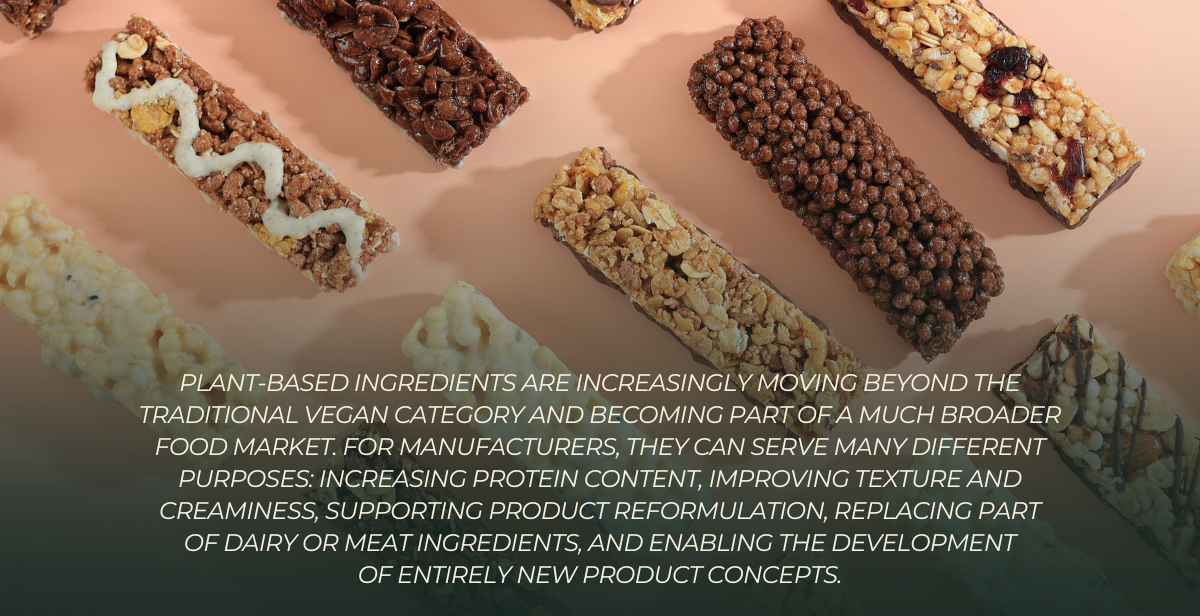
Plant-based ingredients are increasingly moving beyond the traditional vegan category and becoming part of a much broader food market. For manufacturers, they can serve many different purposes: increasing protein content, improving texture and creaminess, supporting product reformulation, replacing part of dairy or meat ingredients, and enabling the development of entirely new product concepts.
Importantly, the growing potential of plant-based ingredients does not mean focusing exclusively on 100% plant-based products. Hybrid solutions that combine animal-based and plant-based ingredients are also becoming increasingly relevant. So, which food categories offer the greatest potential today?
1. Functional, protein and alcoholic beverages
RTD beverages, protein shakes, smoothies, breakfast drinks and functional beverages are among the categories where plant-based ingredients offer particularly strong development opportunities. Pea protein, fava bean protein, oat protein, rice protein and almond protein can be used individually or in blends designed around a specific amino acid profile, texture or sensory characteristics.
In this category, however, protein content alone does not determine product success. Solubility, shelf stability, reduced sedimentation, appropriate viscosity and a clean sensory profile are equally important.
A particularly interesting and less obvious area is alcoholic beverages. Coconut, oat and almond-based ingredients can be used in cream liqueurs, ready-to-drink alcoholic cocktails and other RTD concepts, where they can provide creaminess, contribute to a distinctive flavour profile or replace traditional dairy components.
This shows that the potential of plant-based ingredients in beverages extends far beyond traditional dairy alternatives and protein shakes.
2. Yogurts, puddings and chilled desserts
The plant-based dessert and dairy alternative segment still offers manufacturers significant room for innovation. Coconut, oat, rice and almond bases can be used to create products with very different sensory characteristics – ranging from light and refreshing to rich, creamy and indulgent.
There is also growing potential for products combining a creamy plant-based base with added protein, fibre, fruit or functional ingredients. For R&D teams, the challenge is to find the right balance between texture, taste, emulsion stability and nutritional positioning.
3. Ice cream and frozen desserts
Plant-based ingredients also fit naturally into the ice cream and frozen dessert category. Coconut ingredients can help create a richer and fuller texture, while oat, rice and almond ingredients make it possible to develop very different flavour profiles and product concepts.
Development in this category increasingly goes beyond simply recreating conventional dairy ice cream. We are seeing high-protein concepts, reduced-sugar formulations, functional products and frozen desserts inspired by flavours from around the world. It is a good example of a category where plant-based ingredients can provide both technological and marketing value.
4. Bars, snacks and high-protein products
The protein and functional snack category is developing in many different directions. Consumers increasingly expect more than simply a high protein content. Products are being designed around specific applications such as sport, recovery, energy, concentration, nutrition on-the-go or supplementation of the everyday diet.
Beyond well-established pea protein, ingredients such as fava bean, rice, oat and almond proteins offer manufacturers additional formulation opportunities. A carefully designed protein blend can not only increase protein content but also influence texture, improve the sensory profile and help optimise the nutritional properties of the finished product.
An interesting example of how far the functional bar category can develop is 4.5.0 Extreme Nutrition. The company is developing an 80 g high-nutrition energy bar designed, among other applications, for demanding conditions. The product provides approximately 20 g of complete protein and its formulation also includes creatine, fibre and a broad range of vitamins and minerals.
It demonstrates that a bar can be much more than a simple protein snack – it can become a precisely formulated functional product designed to address very specific consumer needs. More: https://www.450nutrition.com/product
5. Bakery – bread, baked goods and dry mixes
Bakery is one of the most interesting application areas for plant-based ingredients because they can perform a wide range of functions. Plant proteins can be used to increase protein content in bread, cakes, muffins, pancakes and ready-to-use bakery mixes.
Coconut, oat and almond ingredients can also influence flavour, structure, moisture and the overall character of the final product.
There is also considerable potential in functional dry mixes, such as high-protein pancakes, protein-enriched bread mixes and other products targeting consumers looking for alternatives to conventional formulations.
6. Confectionery, spreads and fillings
Plant-based ingredients are increasingly appearing in products that are not necessarily positioned as strictly plant-based. Coconut milk powder can be used in chocolate products, spreads, fillings, pralines, wafers and coatings, particularly where manufacturers need a dry ingredient that is easy to dose and suitable for industrial processing.
Plant-based ingredients can also support the development of dairy-free products, but their potential does not have to be limited to the vegan category. They can simply become one element of the formulation responsible for creating a specific flavour, texture or functionality.
7. Soups, sauces, seasonings and ready meals
This is one of the most promising and, at the same time, relatively underestimated categories. Ingredients such as coconut milk powder are particularly well suited to dry curry mixes, instant soups, sauces, Asian-style dishes and seasoning blends for ready meals.
Powdered formats can simplify dosing and storage while also being highly practical for industrial formulations. Plant proteins can additionally support the development of more nutritious convenience foods, especially products targeted at consumers looking for higher protein content.
It is an area where plant-based ingredients can deliver real technological benefits without requiring the entire product to be positioned around veganism.
8. Breakfast products
Instant oatmeal, granola, muesli, puddings, breakfast shakes and ready-made breakfast mixes are naturally compatible with plant-based ingredients. Oat protein, rice protein, almond protein and coconut ingredients can help increase protein content, improve texture and create a more premium or functional positioning.
This category also has the advantage of combining several important trends at the same time: convenience, high-protein, functional food, clean label and plant-forward nutrition. For manufacturers, this creates considerable flexibility when developing new concepts.
9. Meat alternatives and hybrid products
Meat alternatives remain an important segment of the plant-based market, although the direction of innovation is clearly evolving. Manufacturers are increasingly focusing on taste, texture, juiciness, simpler formulations and a more natural overall product profile. Pea, fava bean and blends of several plant proteins can be used in burgers, nuggets, meatballs, sausages and fillings.
At the same time, hybrid products that combine meat with plant-based ingredients are becoming increasingly important. Examples include burgers, meatballs, sausages and fillings in which part of the meat is replaced with plant protein, vegetables, pulses or other plant-based components.
Such an approach can allow manufacturers to reduce the proportion of meat in the formulation, modify the nutritional profile, increase the share of plant-based raw materials or create products specifically targeted at flexitarian consumers. Depending on the formulation, raw materials used and current ingredient prices, partially replacing meat with plant-based ingredients can also help optimise production costs and, as a result, potentially improve margins on the finished product.
This demonstrates that the future of plant-based does not necessarily mean a simple division between meat and meat-free products. Formats positioned somewhere between these categories may play an increasingly important role – combining the familiar taste and character of meat products with the functionality and formulation opportunities offered by plant-based ingredients.
10. Convenience, ready meals and on-the-go products
Ready-made bowls, pasta dishes, chilled meals, instant products, lunch snacks and complete meal solutions provide a very broad application area for plant-based ingredients.
Depending on the formulation, they can act as a source of protein, provide creaminess, partially replace dairy or meat ingredients, or improve the nutritional profile of the finished product.
The combination of plant-based and convenience is particularly interesting because consumers increasingly expect products that are easy to prepare while also being tasty, filling and aligned with specific nutritional needs.
What does this mean for food manufacturers?
The greatest potential of plant-based ingredients is no longer limited to products found on the “vegan” shelf. They can be used in 100% plant-based products, in conventional formulations as functional ingredients, and in hybrid products combining animal-based and plant-based components.
It is precisely this flexibility that makes plant-based ingredients an increasingly interesting tool for R&D teams. It is no longer only about replacing meat or dairy. It is about designing products that better respond to specific market needs – in terms of nutritional value, texture, taste, functionality and production economics.
At Vegan Stock, we have been supporting food manufacturers and R&D teams for years in selecting the right ingredients for specific applications, new product concepts and technological challenges. If you are developing a new product and looking for the right plant protein, coconut, oat, rice or another plant-based ingredient solution – contact our team. 🌱
Click and join our newsletter
The best for you
Reach us out
Vegan Stock sp. z o.o.
address:
6, Józefa Marcika Str,
30-443 Kraków, Poland
Tax ID No. PL7352876025