
How to create a great plant-based Ready Meal: 7 elements of a successful recipe
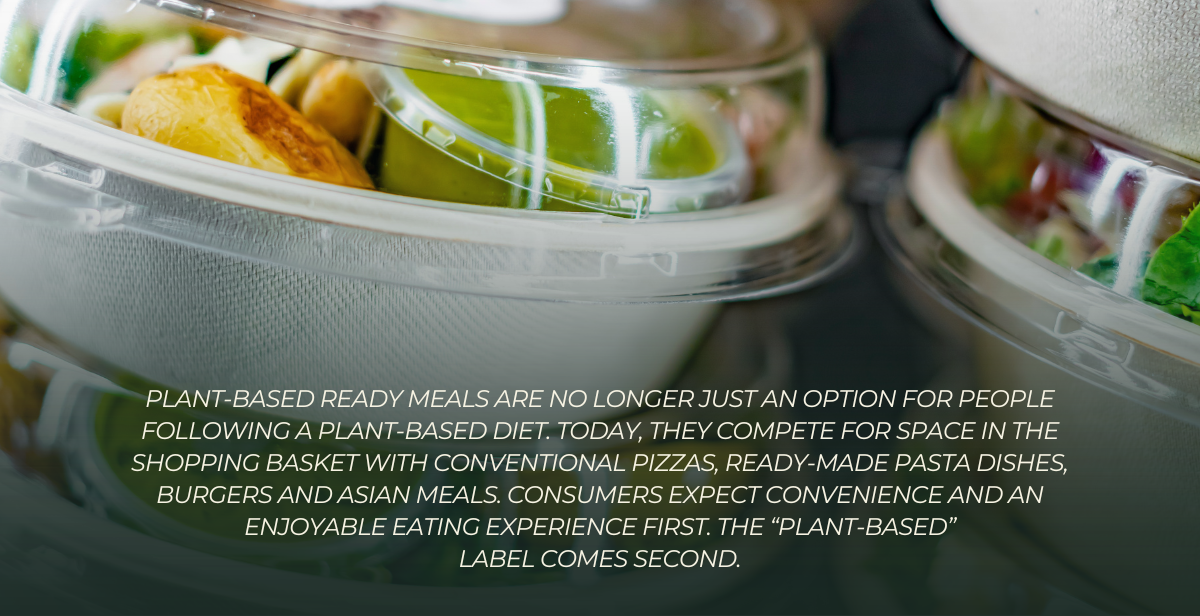
Plant-based ready meals are no longer just an option for people following a plant-based diet. Today, they compete for space in the shopping basket with conventional pizzas, ready-made pasta dishes, burgers and Asian meals. Consumers expect convenience and an enjoyable eating experience first. The “plant-based” label comes second.
A successful recipe therefore involves more than removing meat or dairy. The product needs to deliver on flavour, texture, appearance and performance after heating. Here are seven elements to consider from the earliest stages of product development.
1. A clear product concept and category
Plant-based ready meals cover a broad range of products: chilled and frozen pizzas, rice or grain bowls, pasta dishes, curries, soups, Asian meals, casseroles, as well as ready-to-cook burgers, nuggets, strips, patties and falafel. Each application places different demands on the recipe.
A pizza needs plant-based cheese that melts well and looks appealing after baking. A burger needs a juicy, springy centre and a satisfying flavour when cooked. In a dish with sauce, emulsion stability and the right consistency matter just as much. Before selecting ingredients, it helps to ask a simple question: when will consumers choose this product, and what will they compare it with?
2. Flavour that stands on its own
The best plant-based ready meal does not taste “good for a plant-based product”. It simply tastes good. That means building a complete flavour profile with the right balance of saltiness, acidity, sweetness, roasted notes and umami.
It is worth building flavour in layers. Vegetables, tomatoes, mushrooms, herbs, spices, concentrates and stocks can form the base. Umami-rich ingredients and carefully selected flavours add depth. When working with plant proteins, it is also important to manage unwanted notes, such as an overly beany, earthy or bitter taste.
There is no single solution for every application. A tikka masala needs a different profile from a pepperoni-style pizza or a street food-inspired burger. Consumers should recognise the dish from the first bite and want to buy it again.
3. Texture suited to the eating experience
Texture can determine whether a consumer returns to a product. Dry pieces, a rubbery burger, a watery sauce or overcooked pasta can undermine even an excellent flavour.
In plant-based ready meals, contrasts can make a real difference: a creamy sauce with a crunchy topping, tender vegetables alongside firm protein pieces, or a soft filling in a well-baked crust. For burgers, nuggets and strips, the bite, juiciness and structure are especially important. For complete meals, developers also need to consider what happens after reheating in a microwave, oven or pan.
Structure depends on more than the main ingredient. The choice of starches, fibres, hydrocolloids and fats, as well as the production process, all play a part. This is often where an acceptable recipe becomes a competitive product.
4. Plant protein chosen for the application
Plant protein can contribute nutritional value, structure and satiety, but it needs to suit its role in the product. Key considerations include flavour, colour, solubility, water binding, emulsifying properties and performance during heating and freezing.
Pea protein works in many savoury applications and high-protein products. Fava bean, rice, oat, hemp and almond proteins may also complement a recipe, depending on the desired sensory profile and on-pack claims. Textured plant proteins can help create the structure of fillings, ragù, kebab-style pieces and burgers.
The key is to test an ingredient in the finished product, rather than relying only on a model sample. An ingredient that works well in a shake may behave very differently in pasta sauce, on a pizza or after five minutes of reheating.
5. Fat and sauce as carriers of flavour
Many conventional ready meals owe their satisfying texture to fat and sauce. In a plant-based version, both should be designed to perform a specific function.
The right fat contributes creaminess, carries flavour and reduces the perception of dryness. Coconut-based ingredients can help create richness and a smooth texture in creamy sauces, curries and soups. A sauce also needs to remain stable, resist separation and coat the other ingredients after heating.
This matters particularly in pizzas, casseroles and pasta dishes. If a sauce is too thin, the product can lose its visual appeal. If it is too thick, the dish may feel heavy or dry. A well-balanced sauce brings all the components together.
6. Nutritional value and a clear label
Convenience and a well-designed nutritional profile can go hand in hand. A plant-based ready meal should be satisfying and provide an appropriate amount of protein and fibre, rather than relying mainly on starch and salt. At the same time, the recipe needs to support any claims made about the product.
Consumers may look at protein content, vegetables, salt and the ingredient list, as well as claims such as “source of protein” or “high in protein”. These can help communicate the product’s benefits, provided the finished product meets the relevant requirements and the claims are properly verified.
A clear, easy-to-understand ingredient list also helps consumers make a decision and builds trust in the brand. Early in development, it is worth checking whether the sensory, technical and marketing goals can all be achieved in the same recipe.
7. Stability, convenience and real-life use
A recipe has to work beyond the development kitchen. The finished product must retain its quality through production, packaging, transport, storage and preparation at home. This applies equally to a frozen pizza, a chilled burger and a microwaveable bowl.
Products should be tested under conditions that reflect real use: near the end of their shelf life, after thawing where relevant, after preparation according to the instructions, and even after sitting on the plate for a few minutes. Does the sauce still look appealing? Are the protein pieces still juicy? Does the pizza bake as expected? Does the burger hold together in the pan?
These tests show whether the concept is ready for the shelf. Convenience should be tangible: clear instructions, a reasonable preparation time, an appropriate portion and a result that matches the expectation created by the packaging.
Conclusion
A successful plant-based ready meal brings together seven elements: a clear product concept, satisfying flavour, the right texture, suitable plant protein, well-designed fat and sauce, nutritional value, and stability throughout the product’s life cycle.
Whether it is a pizza, burger or curry, the finished product needs to deliver the experience consumers expect. The pizza should look appetising after baking, the burger should be juicy, and the curry should be creamy and aromatic.
If you are developing a new plant-based ready meal and looking for ingredients suited to your application, contact the Vegan Stock team. We have spent years helping food manufacturers select ingredients, develop new concepts and address technical challenges.
Click and join our newsletter
The best for you
Reach us out
Vegan Stock sp. z o.o.
address:
6, Józefa Marcika Str,
30-443 Kraków, Poland
Tax ID No. PL7352876025