
Beyond Soy: which plant protein sources are worth using in new products?
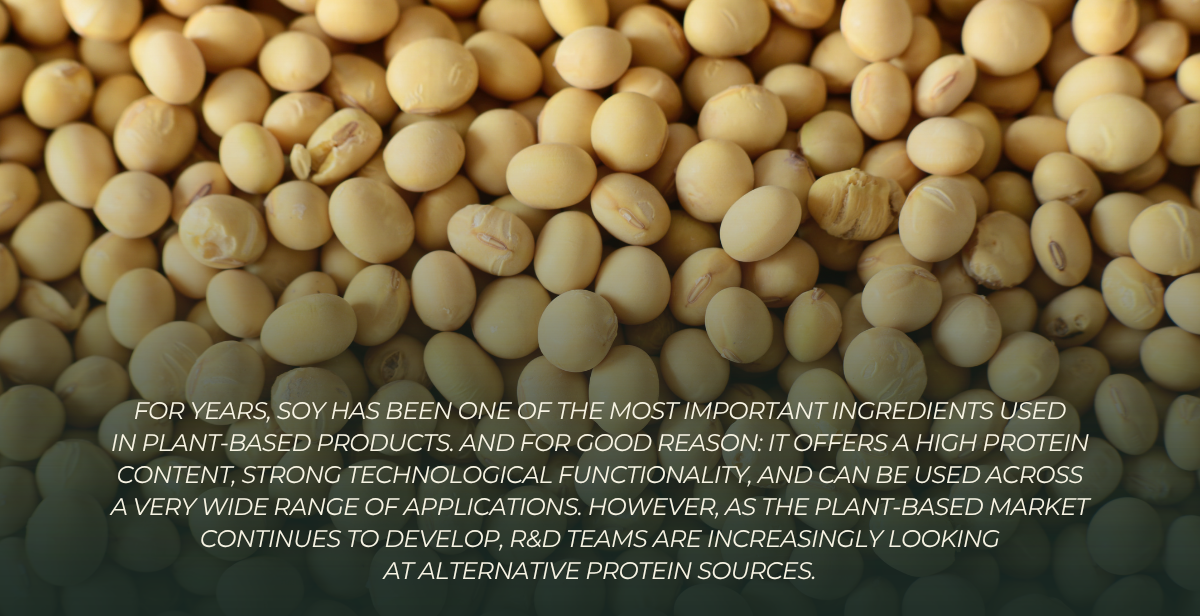
For years, soy has been one of the most important ingredients used in plant-based products. And for good reason: it offers a high protein content, strong technological functionality, and can be used across a very wide range of applications. However, as the plant-based market continues to develop, R&D teams are increasingly looking at alternative protein sources.
There are several reasons for this. Manufacturers want to create new flavour profiles, improve texture, diversify ingredient lists, and respond to consumers looking for new sources of protein. At the same time, the availability of concentrates, isolates, and flours made from legumes, grains, nuts, and seeds continues to grow.
In practice, the question is therefore becoming less about “what can replace soy?” and more about “which protein or combination of proteins will work best in this particular product?”
Pea protein – one of the most versatile choices
Pea protein is currently one of the most established alternatives to soy protein. It can provide good water- and fat-binding properties as well as useful emulsifying and texturising functionality.
This makes pea protein suitable for many different product categories, including: meat alternatives, burgers, nuggets, and convenience products, protein shakes and drinks, high-protein bars and snacks, dairy alternatives, instant mixes, bakery products.
One of the challenges can be its characteristic legume flavour and, in some formulations, a slightly powdery or grainy mouthfeel. However, the final result depends heavily on the quality of the specific ingredient, the production method, and the overall formulation.
Fava bean protein – an increasingly interesting ingredient for R&D
Fava bean protein is a particularly interesting direction for manufacturers looking for less conventional sources of plant protein. It can offer properties useful for emulsification, foaming, and building product structure. For this reason, it can be used both in liquid products and in more complex high-protein formulations.
Fava bean protein can be used in applications such as: protein shakes, smoothies, plant-based drinks, desserts, yogurt alternatives, high-protein products, bars, meat alternatives, bakery products.
It is especially interesting for manufacturers that want to move beyond both soy and the now widely used pea protein.
However, as with other plant proteins, the functionality of fava bean protein can vary significantly depending on extraction and processing methods. Choosing an ingredient based only on its declared protein content is therefore rarely enough.
Chickpea protein – functionality combined with a familiar ingredient
Chickpeas have an additional marketing advantage: consumers already know and understand them very well. Products such as hummus and falafel have made chickpeas a familiar ingredient that usually requires little explanation on the label.
From a technological perspective, chickpea protein can provide useful properties related to emulsification, water binding, and foaming. It can therefore be an interesting ingredient in both savoury products and functional high-protein formulations.
Potential applications include: sauces and dressings, spreads and dips, convenience products, snacks, bakery products, meat alternatives, protein-enriched products.
Chickpea protein can also support product communication, particularly when manufacturers want to build recipes around familiar and recognisable ingredients.
Rice protein – a valuable partner in protein blends
Rice protein is particularly worth considering as part of a protein blend. Its relatively mild profile can be useful in applications where the protein should not overpower the final flavour of the product.
A common approach is to combine cereal proteins with proteins derived from legumes. This can help create a more balanced amino acid profile while also improving sensory characteristics.
One example is: pea protein + rice protein
Such a blend can be a good starting point for protein powders, shakes, bars, instant mixes, and sports nutrition products.
Oat protein – an interesting direction for drinks, snacks, and high-protein products
Oat protein fits naturally into the development of plant-based foods because oats are already strongly associated with plant-based drinks, desserts, and breakfast products. One of its advantages can be its relatively mild cereal flavour, which pairs well with cocoa, vanilla, coffee, fruit, or nut flavours. It can also be an interesting option for manufacturers developing formulations based on several complementary protein sources.
Oat protein can be considered for: protein drinks, shakes and smoothies, dairy alternatives, plant-based desserts, bars and snacks, breakfast products, instant mixes, bakery products.
Combining oat protein with pulse proteins such as pea or fava bean protein can be particularly interesting. Such blends allow R&D teams to work simultaneously on nutritional value, flavour, and overall product functionality.
Almond protein – potential for premium product concepts
Almond protein can be an attractive option for products in which nutritional value and premium positioning are equally important. Almonds are already familiar to consumers and are strongly associated with plant-based beverages, healthy snacks, and premium products. Using almond protein can therefore support not only formulation development but also the marketing story behind the final product.
Its mild, slightly nutty profile can work particularly well in: protein drinks, smoothies, desserts, yogurt alternatives, protein bars, granola, breakfast products, bakery products, shake mixes, healthy snacking concepts.
Almond protein can also be used as part of blends, for example together with pea, rice, or oat protein. This can help create a more complex sensory profile while differentiating the product from formulations based solely on the most common plant protein sources.
However, there is one important consideration: almonds are an allergen, so the use of almond protein requires appropriate labelling and should be taken into account from the earliest stages of product development.
Mung bean protein – particularly interesting when structure matters
Mung bean protein is another example of how quickly the range of available plant protein ingredients is expanding. It can be particularly interesting in products where structure, gelation, and the ability to recreate textures traditionally associated with animal proteins are important.
Potential applications include: plant-based egg alternatives, breakfast products, convenience foods, meat alternatives, high-protein products.
Mung bean protein does not necessarily need to replace other proteins entirely. In many cases, it may work better as one functional component of a broader protein blend.
Seed proteins – hemp, pumpkin seed, and sunflower
Another interesting group consists of proteins derived from seeds. Hemp, pumpkin seed, and sunflower proteins may be particularly valuable in products where differentiation is as important as protein content itself.
Their more characteristic flavour and colour can be a limitation in very delicate drinks or desserts, but in other applications these properties may actually become part of the product concept.
They can be considered for applications such as: bread, crackers, granola, bars, snacks, protein blends, products positioned around natural or wholefood ingredients.
With these ingredients, the goal does not always have to be complete flavour neutrality. Their distinctive sensory profile can become part of the identity of the final product.
One protein or a blend?
One of the most interesting directions in new product development is combining several protein sources. A single ingredient does not have to provide the ideal flavour, texture, solubility, amino acid profile, functionality, and price at the same time. A more practical approach may be to use different proteins for different purposes within the same formulation.
For example:
- pea + rice – a popular combination for protein products,
- fava bean + pea – an interesting base for high-protein products and meat alternatives,
- oat + pea – particularly interesting for drinks and breakfast products,
- almond + rice – a potential option for products requiring a more delicate and premium sensory profile,
- chickpea + cereal protein – an interesting combination for convenience and bakery applications,
- seed protein + pulse protein – a way to create a more distinctive product profile.
The usefulness of a specific plant protein is determined not only by the crop from which it comes. Extraction method, protein concentration, drying process, solubility, particle size, and subsequent processing conditions can all have a major impact on its behaviour in the final formulation.
Concentrate, isolate, or flour?
This decision can be just as important as choosing the protein source itself.
An isolate – can provide a high protein concentration and make it easier to develop products with strong high-protein positioning.
A concentrate – can offer a balance between protein content, functionality, and cost.
Flours – made from legumes, grains, nuts, or seeds may provide not only protein but also other naturally occurring components of the raw material.
Importantly, fractionation and processing methods can significantly change the technological properties of the protein. Two ingredients both described as “pea protein”, “oat protein”, or “fava bean protein” may therefore behave very differently in exactly the same recipe.
How should you choose a protein for a new product?
The best starting point should not be: “Which plant protein is the best?” A better question is: “What kind of protein does this particular product need?”
In a protein drink, the key parameters may be solubility, stability, mouthfeel, and a relatively neutral flavour. In a plant-based burger, water and fat binding, texture, and behaviour during cooking may be more important. In a dessert, creaminess and emulsion stability can become critical. In bakery products, manufacturers need to consider how additional protein affects dough structure, moisture, volume, and final texture.
This is why R&D teams should define several parameters early in the development process: desired protein content, flavour profile, texture, solubility, processing requirements, raw material cost, nutritional positioning, and the way the ingredient will be communicated to consumers.
Beyond soy means more possibilities
Moving beyond soy does not mean that soy is no longer a valuable ingredient. It simply means that manufacturers now have a much wider range of options.
Pea, fava bean, chickpea, mung bean, rice, oat, almond, hemp, pumpkin seed, sunflower, and other emerging protein sources make it possible to develop products with very different technological properties, sensory profiles, nutritional characteristics, and market positioning.
For manufacturers, the key is therefore not to look for one universal replacement for soy, but to build the formulation around the specific functionality required by the product. The right combination of protein source, protein format, processing technology, and supporting ingredients can determine whether a new product is simply “high in protein” or whether it is also tasty, stable, functional, and attractive to consumers.
Not sure which protein will work best in your product?
Choosing the right ingredient can be difficult, especially when several protein sources, formats, and technological solutions are available.
Contact our team. Vegan Stock has been supporting food manufacturers for years in selecting the right ingredients for new products.
We consult new ideas, product concepts, formulations, and technological solutions, helping manufacturers choose ingredients that match both the desired product characteristics and production requirements.
Whether you are developing a new plant-based drink, high-protein snack, dairy alternative, meat alternative, dessert, bakery product, or another innovative food concept, we can help you find the right ingredients and solutions for your project.
Click and join our newsletter
The best for you
Reach us out
Vegan Stock sp. z o.o.
address:
6, Józefa Marcika Str,
30-443 Kraków, Poland
Tax ID No. PL7352876025